Hard-Water Solutions
Water Softeners in Syracuse, NY
Hard water leaves scale on fixtures, spots on glassware, and makes soap harder to work with. A properly sized water softener addresses the hardness minerals causing it — so your home's water works the way it should.
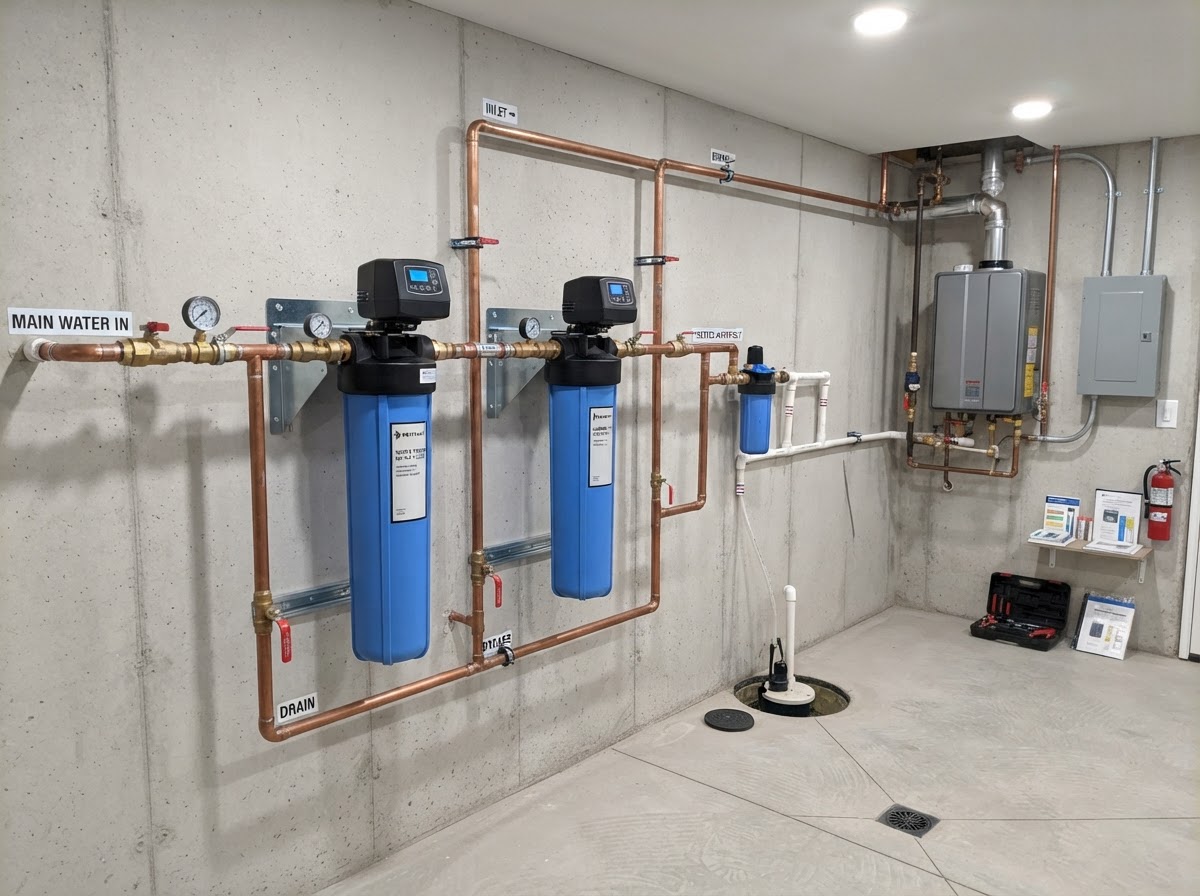
What Hard Water Is
Hard water simply means water with elevated levels of dissolved minerals — mainly calcium and magnesium. It's common across Central New York, and it's not a health concern. The frustration is what it leaves behind: scale, spotting, and soap that won't lather the way it should.
Common Signs of Hard Water
White, chalky scale forming around faucets and showerheads. Spots and film on glassware straight out of the dishwasher. Soap and shampoo that feel less effective and leave residue. Scale building up inside water heaters, washing machines, and plumbing — which can shorten appliance life and reduce efficiency over time.
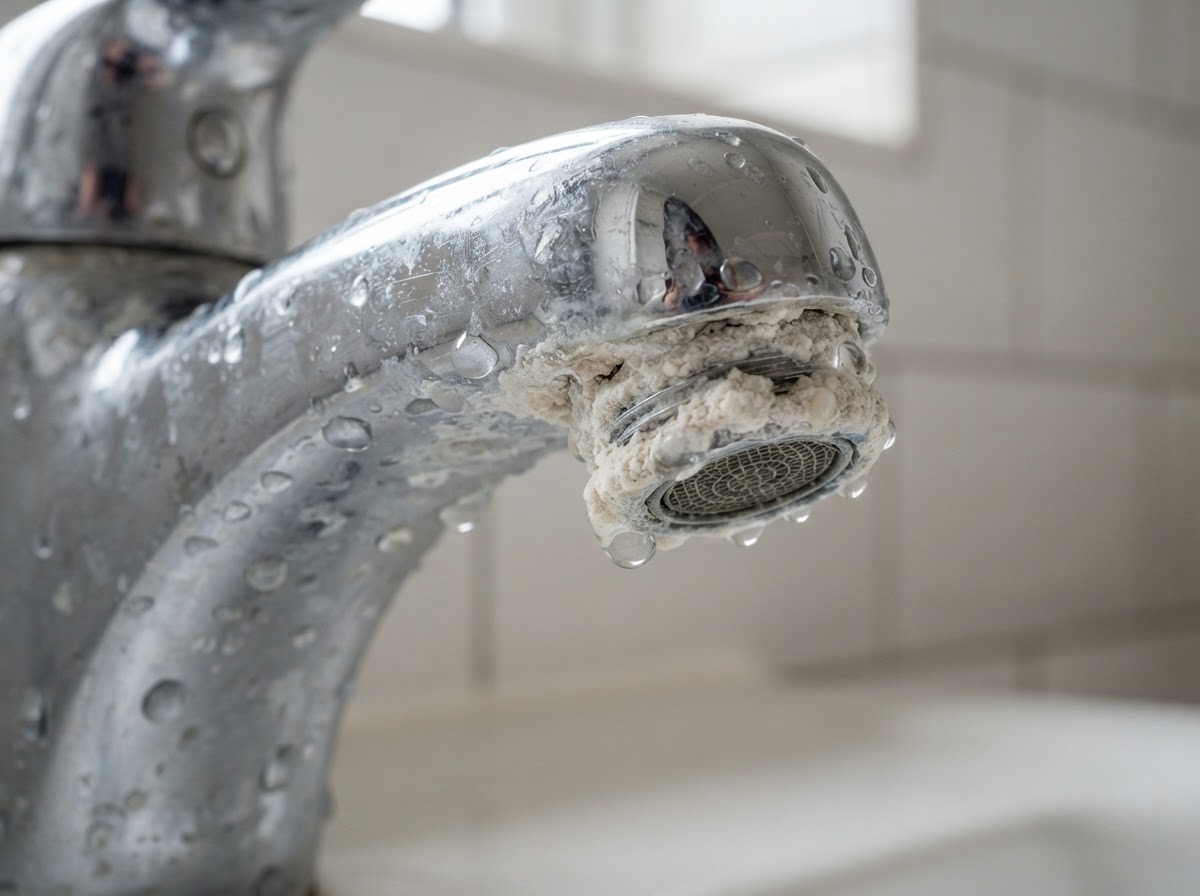
If several of those sound familiar, hardness is a likely culprit. The way to confirm it is a water test that measures hardness directly.
How Ion-Exchange Softeners Work
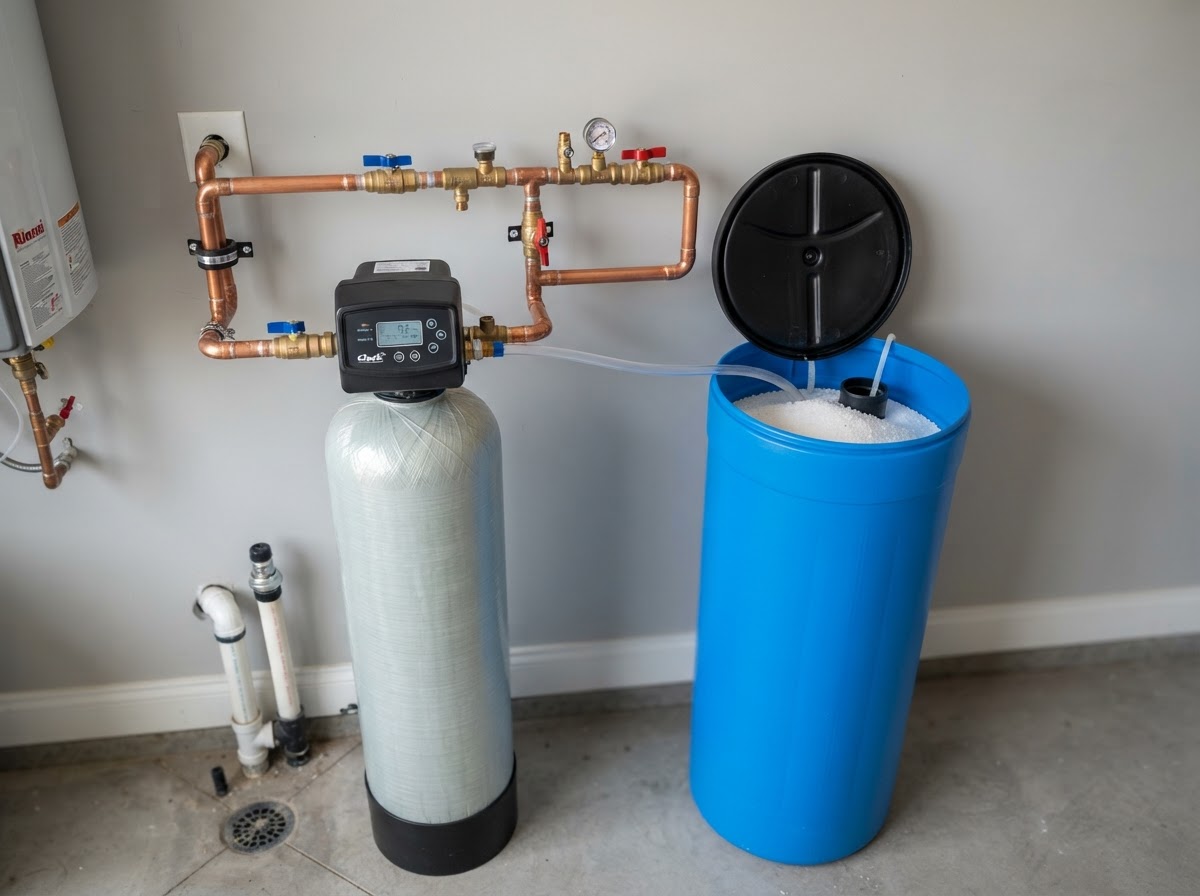
A traditional water softener passes hard water through a resin bed that exchanges hardness minerals for sodium or potassium ions. The calcium and magnesium stay trapped on the resin while softened water flows into the home. On a set schedule, the system regenerates — flushing the trapped minerals out with brine and recharging the resin.
Water Softener vs. Water Filter
These solve different problems. A softener targets hardness minerals that cause scale. A water filter reduces sediment, chlorine, taste, and odor. Softening doesn't make water cleaner to drink — it makes it gentler on fixtures, appliances, and skin.
When You Might Need Both
Many homes benefit from a softener and a filtration system working together — the softener handles hardness while filtration addresses chlorine, sediment, or drinking-water quality. If you also want high-quality drinking water, a reverse osmosis system at the kitchen is a common addition.
Salt-Based vs. Alternative Conditioning
Traditional salt-based softeners physically remove hardness through ion exchange. Alternative conditioning approaches aim to reduce scale without removing the minerals, often with lower maintenance and no salt. The right fit depends on your water conditions, goals, and how much maintenance you want to take on.
Sizing a System
A softener that's too small will run out of soft water; one that's too large regenerates inefficiently. Sizing depends on measured hardness, household size, and peak water use. We size the system to your actual demand rather than defaulting to a generic unit.
Installation & Maintenance
Installation places the softener on the main water line, typically with a bypass valve for service. Maintenance for salt-based systems means keeping salt in the brine tank and occasional checks on the resin and settings. We walk you through the routine at installation.
Frequently Asked Questions
What is hard water?
Hard water is water with elevated levels of dissolved minerals — primarily calcium and magnesium. It's not a health hazard, but it causes scale buildup, soap scum, spotting on glassware, and reduced efficiency in water-using appliances.
Does a water softener filter my drinking water?
A softener addresses hardness minerals, not taste, odor, or contaminants. If you want highly filtered drinking water, a reverse osmosis system at the kitchen is a better fit. Many homes use both — a softener for scale and RO for drinking.
How does a water softener work?
Most softeners use ion exchange. Hardness minerals in the water are exchanged for sodium or potassium ions on a resin bed. When the resin is saturated, the system regenerates with brine to flush the minerals and recharge the media.
Salt-based vs. alternative conditioning — what's the difference?
Traditional salt-based softeners physically remove hardness minerals through ion exchange. Alternative conditioning devices (often called descalers) may alter the minerals' behavior to reduce scale without removing them. The right choice depends on your water, goals, and maintenance preferences.
How is a softener sized for my home?
Sizing depends on the water's hardness level, the number of people in the home, and peak water use. An evaluation of the water and household demand determines the right capacity so the system regenerates efficiently without running out of soft water.
Tired of Scrubbing Scale Off Everything?
Tell us what you're seeing — spots, scale, soap that won't lather — and we'll help figure out if a softener is the right fit for your Syracuse-area home.