Drinking Water Filtration
Reverse Osmosis in Syracuse, NY
Reverse osmosis delivers highly filtered drinking water from a dedicated kitchen faucet — a focused solution for homeowners who care about the water they drink and cook with.
What Reverse Osmosis Is
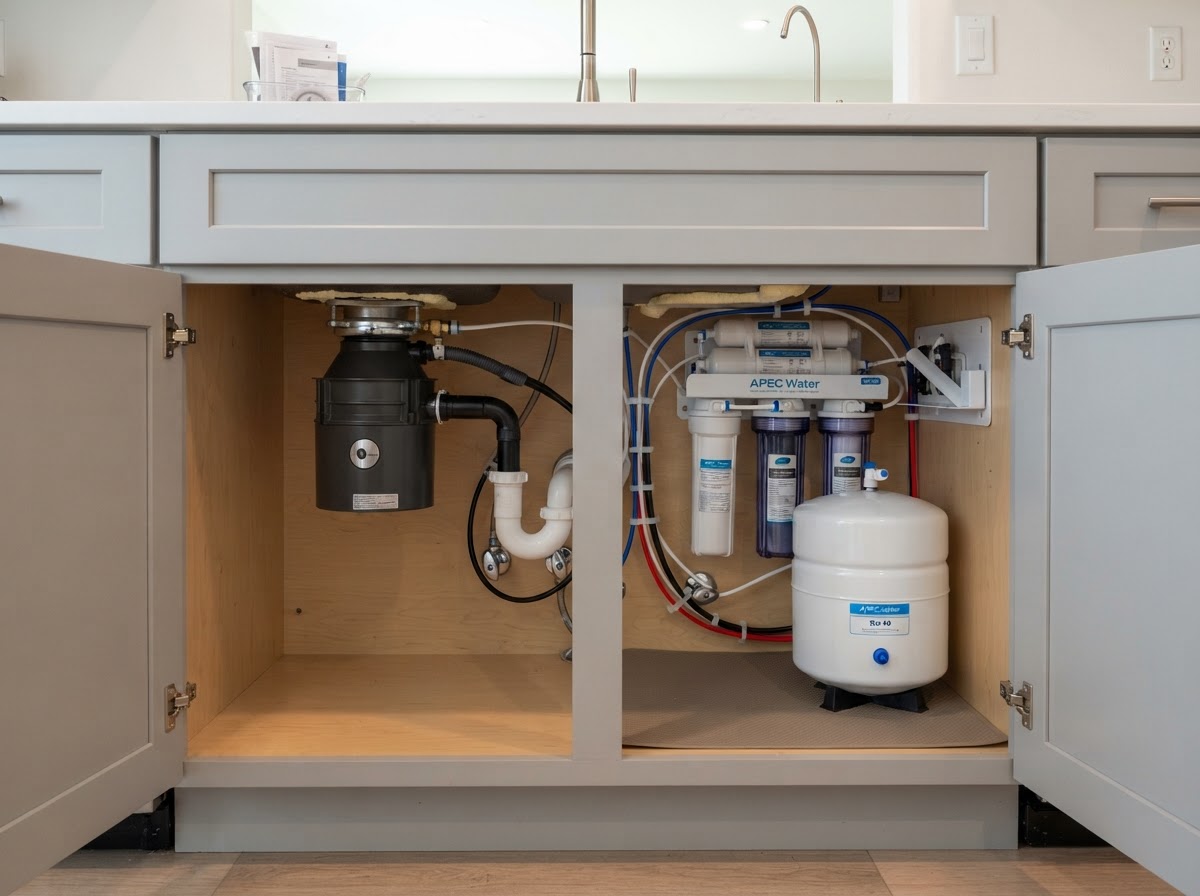
Reverse osmosis (RO) is a point-of-use drinking-water system that installs under the kitchen sink and feeds a dedicated faucet. Instead of treating water for the whole house, it focuses on producing a small, steady supply of highly filtered water for drinking and cooking.
How RO Filtration Works
Pressure pushes water through a semi-permeable membrane with pores so fine that many dissolved solids and contaminants can't pass through. The filtered water goes to your faucet; the rejected impurities are flushed away. It's a physical separation process — no chemicals added to the water you drink.
Typical Multi-Stage Filtration
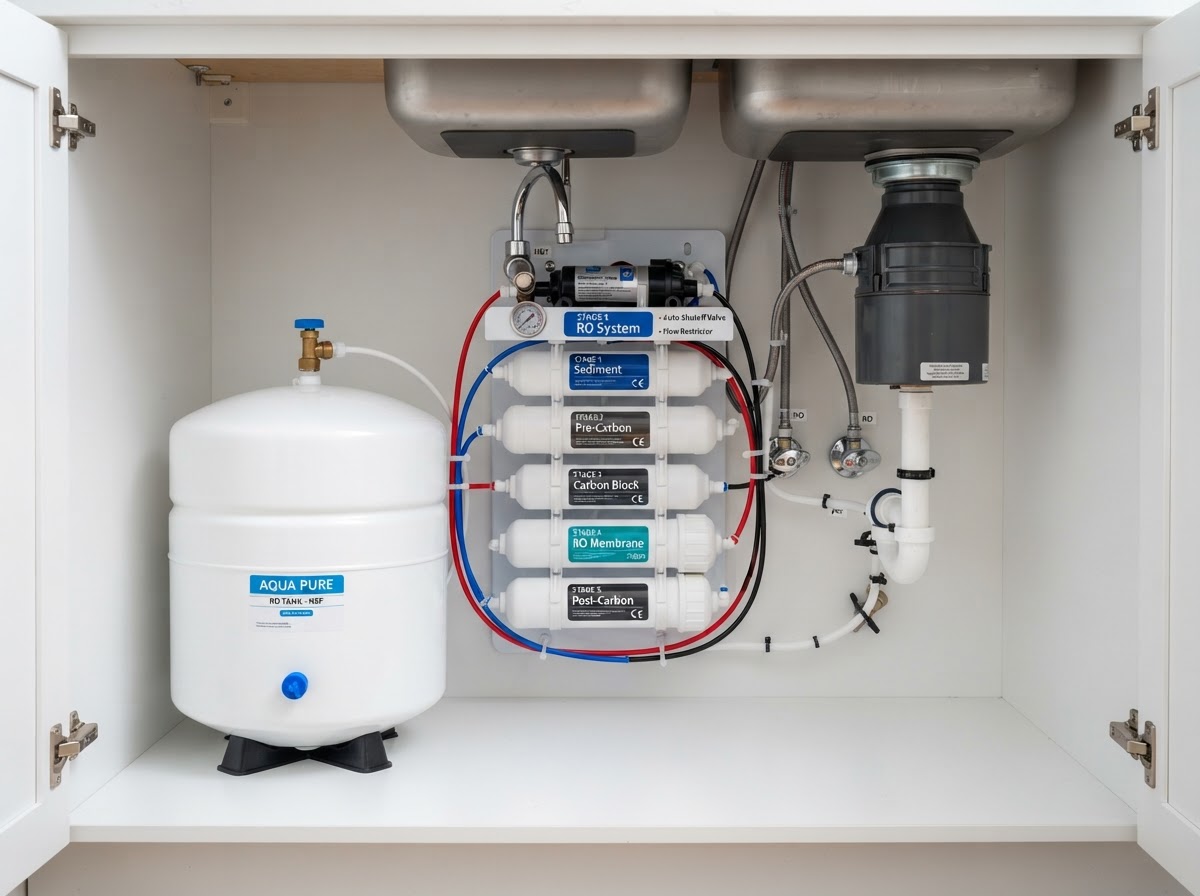
Most under-sink RO systems use several stages: a sediment pre-filter to protect the membrane, a carbon pre-filter to reduce chlorine and taste/odor, the RO membrane itself, and a final carbon post-filter for polish. The result is a layered approach that produces clean, good-tasting drinking water.
Why Homeowners Choose RO
People install RO when the water they drink matters to them — for taste, for cooking, for coffee and tea, or for confidence in what's coming out of the tap. It's a compact, dedicated solution that doesn't require treating every gallon in the house.
Drinking & Cooking Applications
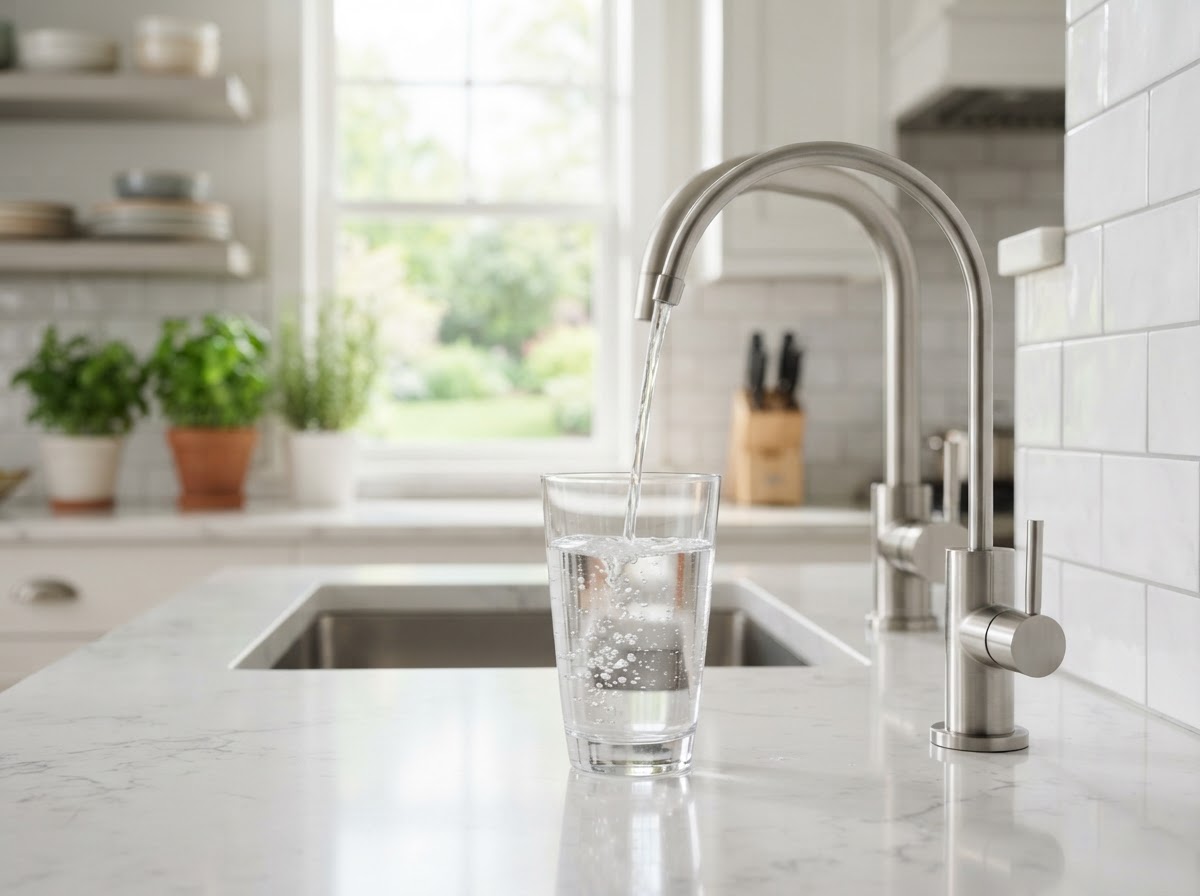
An RO faucet at the kitchen sink gives you filtered water for drinking, ice, coffee, cooking, and rinsing produce — all from one dedicated source, separate from your regular tap.
Under-Sink Systems
Under-sink RO systems tuck beneath the kitchen cabinet with a small storage tank and a dedicated faucet mounted on the sink. They're unobtrusive and don't take up counter space.
Whole-House Filtration vs. RO
Whole-house filtration treats water for the entire home; RO treats water at a single drinking faucet. They're complementary. If you want better general water quality throughout the house and high-quality drinking water at the kitchen, using both is a common setup.
When Using Both Makes Sense
If your whole-house system handles chlorine and sediment but you still want the cleanest possible drinking water, adding RO at the kitchen gives you both. If hard water is also an issue, a softener can round out the setup.
Filter & Membrane Maintenance
Pre- and post-filters are replaced on a regular schedule; the RO membrane lasts longer, with its lifespan depending on water quality and use. Keeping up with filter changes protects the membrane and keeps the system performing the way it should.
Installation
Installation mounts the system under the sink, installs the dedicated faucet, and connects to the cold-water line. We explain how the system works, what the maintenance schedule looks like, and what to expect from the water.
Frequently Asked Questions
What is reverse osmosis?
Reverse osmosis is a filtration process that forces water under pressure through a semi-permeable membrane with extremely fine pores. The membrane allows water molecules through while blocking a wide range of dissolved solids and contaminants, producing highly filtered drinking water.
Is reverse osmosis worth it?
For homeowners who want high-quality drinking water from a dedicated faucet, RO is a popular choice for drinking and cooking. It's a point-of-use system, so it complements rather than replaces whole-house filtration when both goals matter to you.
Does reverse osmosis remove everything?
No system removes everything, and RO performance depends on the specific membrane and system specifications. RO is effective at reducing many dissolved solids and contaminants, but exact reduction depends on the certified specifications of the particular system installed.
How often do RO filters need to be changed?
Pre-filters and post-filters are typically replaced on a regular schedule, while the RO membrane lasts longer depending on water quality and use. We walk through the maintenance plan for your specific system at installation.
Should I get RO if I already have a whole-house filter?
They serve different purposes. Whole-house filtration improves general water quality throughout the home; RO provides highly filtered drinking water at one faucet. Many homeowners use both — whole-house for everyday water and RO for drinking and cooking.
Want Better Drinking Water at the Kitchen Sink?
Tell us what you'd like to improve about your drinking water and we'll help determine whether reverse osmosis is the right fit for your Syracuse-area home.